Short-form video is no longer a single platform strategy. The creators growing fastest right now are publishing consistently on TikTok, Instagram Reels, and YouTube Shorts simultaneously — reaching three distinct audiences with one piece of content. The problem is that each platform has its own format requirements, algorithm behaviors, and audience expectations. Managing all three manually is a serious production burden.
An AI shorts generator solves the core bottleneck: producing content fast enough to maintain presence across all three platforms. Framia Pro takes that a step further by handling the platform-specific formatting differences automatically, so the same core content adapts to wherever your audience lives.
This guide covers what you need to know about each platform, where they differ, and how to build a workflow that keeps you visible across all three without tripling your production time.
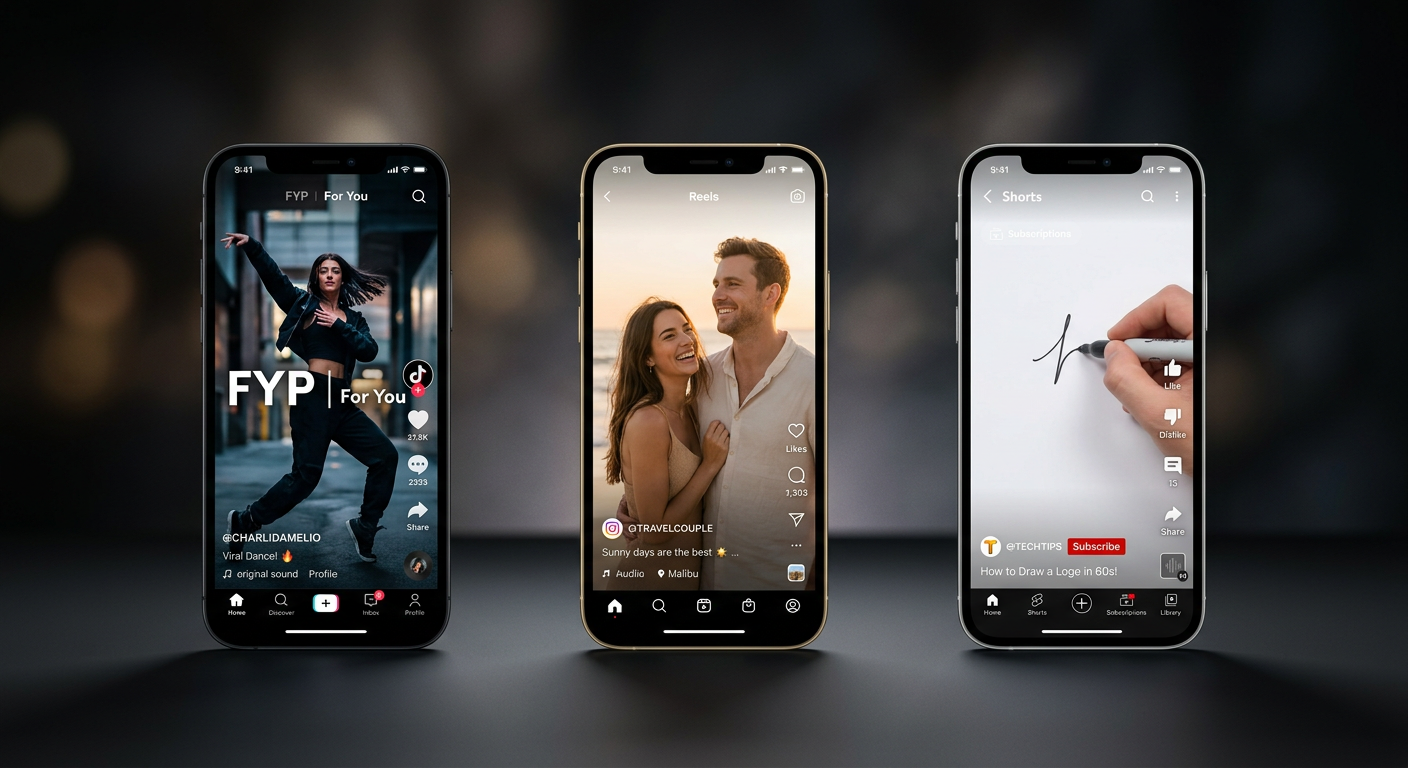
Why Each Platform Needs a Different Approach
Short-form video spans three platforms, but the viewer behavior on each is significantly different — and those differences should shape your content strategy, not just your aspect ratio.
TikTok has the most powerful discovery algorithm of the three. A new account with zero followers can hit a million views on its first video if the content resonates. TikTok's algorithm measures completion rate above everything else — if viewers finish your video, it gets pushed wider. The implication for your AI short video generator prompts: front-load the value, keep the hook ruthless, and avoid slow intros.
Instagram Reels is heavily weighted toward aesthetics. Instagram's user base has higher visual expectations than TikTok's, and the platform's recommendation engine appears to favor polished-looking content. Reels also has stronger commerce integration than the other two, making it the better platform for product-adjacent content.
YouTube Shorts has the most durable SEO value. Unlike TikTok and Reels, Shorts content surfaces in Google search results and in YouTube's main search — which means a Short can drive views six months after publication. The audience also skews slightly older and more intent-driven than TikTok. Educational and how-to content performs particularly well here.
Each platform has a different algorithmic priority, audience expectation, and content culture — making it worth tailoring your approach per platform even when the generation process itself stays the same.
Format Specifications Across All Three Platforms
Before building a cross-platform workflow, get the technical specs right. Minor format mismatches — wrong aspect ratio, oversized file, wrong frame rate — can cause upload failures or degraded visual quality.
| Spec | TikTok | Instagram Reels | YouTube Shorts |
|---|---|---|---|
| Aspect ratio | 9:16 | 9:16 | 9:16 |
| Resolution | 1080×1920 | 1080×1920 | 1080×1920 |
| Max length | 10 min | 90 sec | 60 sec |
| Frame rate | 24–60fps | 24–60fps | 24–60fps |
| Safe zone | Upper/lower 15% | Upper/lower 15% | Upper 20% (UI overlap) |
All three platforms use 9:16 vertical format — this is where an AI shorts generator built for vertical-first production has a significant advantage over horizontal-first editors. The safe zones matter most for captions: YouTube Shorts has the most aggressive UI overlap in the upper portion of the screen, where the channel name and subscriber count display.
Building a Single-Source, Multi-Platform Workflow
The most efficient approach to cross-platform publishing isn't creating three separate videos — it's creating one core video and adapting it for each platform. Here's how that works in practice:
Step 1: Create for your primary platform first. Choose the platform where your audience is strongest or where your content type performs best, and generate for that platform's context. If you're primarily a YouTube creator, your prompt should optimize for YouTube Shorts: educational hook, search-intent topic, slightly longer pacing.
Step 2: Adjust for secondary platforms at the editing layer. The core content stays the same; the tweaks are platform-specific:
- For TikTok: tighten the hook to the first 1.5 seconds, trim any intro, increase cut pace
- For Reels: enhance visual quality if possible, ensure captions are aesthetically placed, add any commerce-relevant context
- For YouTube Shorts: confirm the topic has search intent, verify the title/description is keyword-optimized
Step 3: Export in platform-specific settings. Caption placement, safe zone margins, and any end-card elements should be platform-adjusted before export.
Framia Pro's YouTube Shorts maker is built for this workflow — you generate once and get clean exports formatted for each platform, so there's no re-editing from scratch per destination.
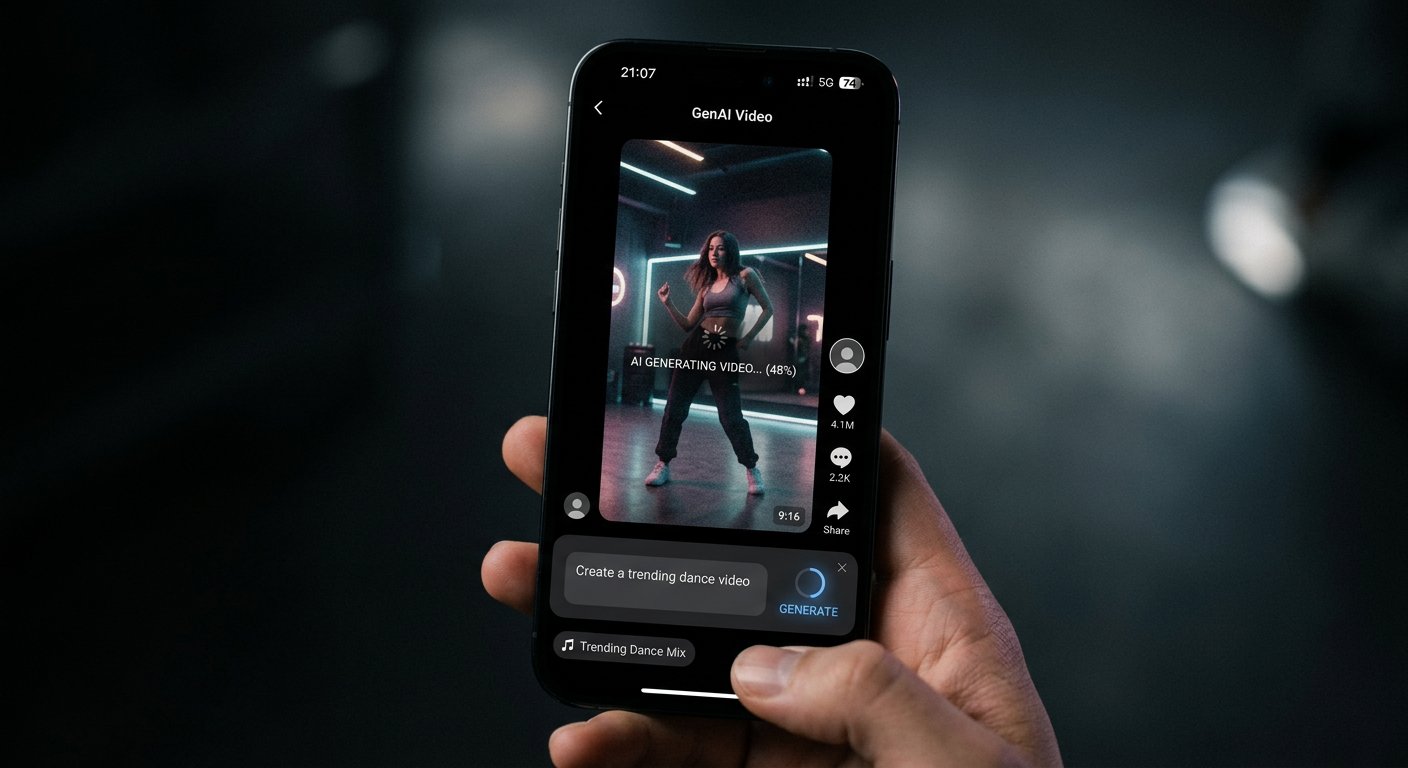
TikTok: Prompting for Maximum Completion Rate
TikTok rewards completion rate above almost everything else, so that's the number your prompts should be built around.
Start ruthless. Open mid-action or mid-statement — skip the "hey guys" and any preamble about what's coming. If you can cut the first few seconds and lose nothing, cut them.
The same logic applies to every scene after that. Trim dead air wherever you find it. If a shot can lose half a second and still land the point, it should.
Here's a detail a lot of creators miss: loops matter. Viewers who watch a video twice — even by accident, because the ending flows straight back into the beginning — give it a real boost in the algorithm. A question, an unresolved beat, a circular structure that snaps back to frame one: any of these can do it.
Don't forget text either. A large chunk of TikTok's audience watches with the sound off, so a bold text overlay in the first couple of seconds works as a second hook, not just decoration.
Instagram Reels: Prompting for Visual Quality and Commerce
Reels plays by a different set of rules. The bar for visual polish is higher here, and prompting for speed over craft tends to backfire.
Fewer, better scenes beat more of them. A handful of well-composed shots usually outperforms a fast-cut sequence on Instagram. Skip "fast-paced" in your prompt and reach for words like "cinematic," "polished," or "high production quality" instead.
Product content also has a natural home on Reels. Instagram's commerce tools are stronger than TikTok's or YouTube's, so if what you're making has any product angle at all, this is the platform where it earns real commercial value. Naming the product directly in your prompt works better than leaving it vague.
Visual identity matters here too. Repeat colors, repeat caption styles, and your Reels start to feel like a recognizable feed, not a pile of random clips.
One thing that trips people up: hard selling doesn't land on Instagram the way it does elsewhere. Soft CTAs — "follow for more," "save this," "tag someone who needs this" — consistently outperform anything that sounds like an ad.
YouTube Shorts: Prompting for Search and Retention
YouTube Shorts is the odd one out — it's the only one of the three where SEO actually shapes discovery, months after you hit publish.
That changes how you should open a video. Your first line should basically answer the search query that brought someone there. Someone searching "how to fix gym plateau" should hear that phrase, or something close to it, in your opening sentence.
It also changes your pacing tolerance. YouTube viewers on Shorts will sit through a slightly longer setup if there's real educational payoff — a 3–4 second hook is fine, though a 10-second intro is pushing it. Keep individual scenes short (3–5 seconds tends to be the sweet spot), but don't cut so fast it feels chaotic. Retention is what YouTube is measuring here, not just watch time.
And skip the loop close that works on TikTok. YouTube Shorts rewards a clear ending instead — a summary line, a direct recommendation, or a question that gets people commenting.
How Framia Pro Unifies the Cross-Platform Workflow
Managing three platforms manually means maintaining three separate production queues, three sets of format settings, and three posting schedules. For most solo creators, that's the actual reason cross-platform publishing stalls — not content ideas, but operational complexity.
Framia Pro's AI shorts generator is designed to collapse that complexity. The generation engine runs on Seedance 2.5 — a model built specifically for vertical social video, so output quality holds up on all three platforms. A single generation session produces content ready for export across TikTok, Reels, and YouTube Shorts, with platform-specific adjustments applied at the export stage, not the content stage.
Here's what that actually looks like in the product:
- Vertical-native generation: Every project starts at 9:16, so there's no landscape-to-vertical conversion at any point in the workflow
- Platform export presets: Safe zone margins, caption positioning, and encoding settings are configured per platform — one click, not three
- Caption style control: Style your captions once and apply them consistently across all exports, maintaining visual identity across platforms
- Batch scheduling: Queue exports for all three platforms with platform-appropriate posting times set in advance
Cross-Platform Analytics: What to Measure and Why
Once you're publishing across all three platforms, the data gets more interesting — but also more complex. Here's what to track per platform and why it matters:
TikTok: Watch completion rate first, then shares. Comments and follows are secondary signals. A video with 50% completion and high shares is outperforming a video with 80% completion and no shares.
Instagram Reels: Saves are the most valuable engagement action. A save signals that the viewer found the content worth returning to — which Instagram's algorithm weights heavily. Watch reach vs. account follows to understand how much of your growth is coming from non-followers.
YouTube Shorts: Focus on subscriber conversion rate — what percentage of viewers subscribe after watching. YouTube Shorts is the platform where short content most directly feeds long-form channel growth.
Feed this data back into your prompting strategy: the topics, hooks, and formats that consistently perform on each platform should become your prompt templates for that platform.

Start Publishing Across All Three Platforms
The opportunity in cross-platform short-form video isn't about doing more work — it's about making the work you're already doing reach more people. An AI short video generator that handles production efficiently makes the multi-platform strategy viable for individual creators and small teams who can't afford separate production workflows per platform.
Generate once, adapt intelligently per platform, and build presence where your audience already is — without tripling your production time.
Your audience is already across TikTok, Reels, and YouTube. Framia Pro helps you be there too.
FAQ
Do I need a different AI shorts generator for each platform?
Not really. The video content itself doesn't need to change from platform to platform — only the formatting does. A tiktok shorts generator, an instagram reels generator, and a youtube shorts maker all need the same 9:16 output; what changes is safe zones, caption placement, and pacing. One AI short video generator that handles export presets per platform saves you from running three separate production tools.
Why does the same video perform differently on TikTok, Reels, and YouTube?
Because the algorithms are measuring different things. TikTok weighs completion rate above almost everything else, Instagram leans on saves and visual polish, and YouTube Shorts is the only one of the three where search intent plays a real role. A video built for one platform's priorities won't automatically hit the marks on another, which is why adjusting the hook, pacing, and CTA per platform matters more than most creators expect.
What video format works across TikTok, Reels, and YouTube Shorts?
All three currently support 9:16 vertical video at 1080×1920, so a single vertical-first generation covers the base format for every platform. Length limits differ though — TikTok allows up to 10 minutes, Reels caps at 90 seconds, and YouTube Shorts tops out around 60 seconds, so trim accordingly at export.
Should I post the exact same video on all three platforms?
You can, but it usually leaves performance on the table. Small adjustments — a tighter hook for TikTok, softer CTA language for Instagram, a search-friendly opening line for YouTube — tend to lift results without requiring a full separate production for each platform.
How does Framia Pro help with publishing across multiple platforms?
Framia Pro generates video natively in 9:16 using Seedance 2.5, then applies platform-specific export presets — safe zones, caption placement, encoding — from that single source. You produce content once and get exports ready for TikTok, Reels, and YouTube Shorts without re-editing from scratch for each one.